RAAVE test in bike café
Sea Otter Europe 2026: the FAAST unveiled in Girona
Four days in Girona, two bikes unveiled: the FAAST, our aero titanium road bike whose critical frame zones are 3D-printed, and a GRAAVE built with a 14-speed electronic drivetrain. The story of Sea Otter Europe 2026.
Contents
Sea Otter Europe 2026 took over Girona from 18 to 20 September for its tenth edition. CYKL unveiled the FAAST there, its aero titanium road bike whose critical frame areas are 3D printed, and showed a GRAAVE built with a 14-speed electronic drivetrain. Three days on the stand, two bikes nobody had seen yet, and a lot of people stopping by.
The FAAST, unveiled in Girona#
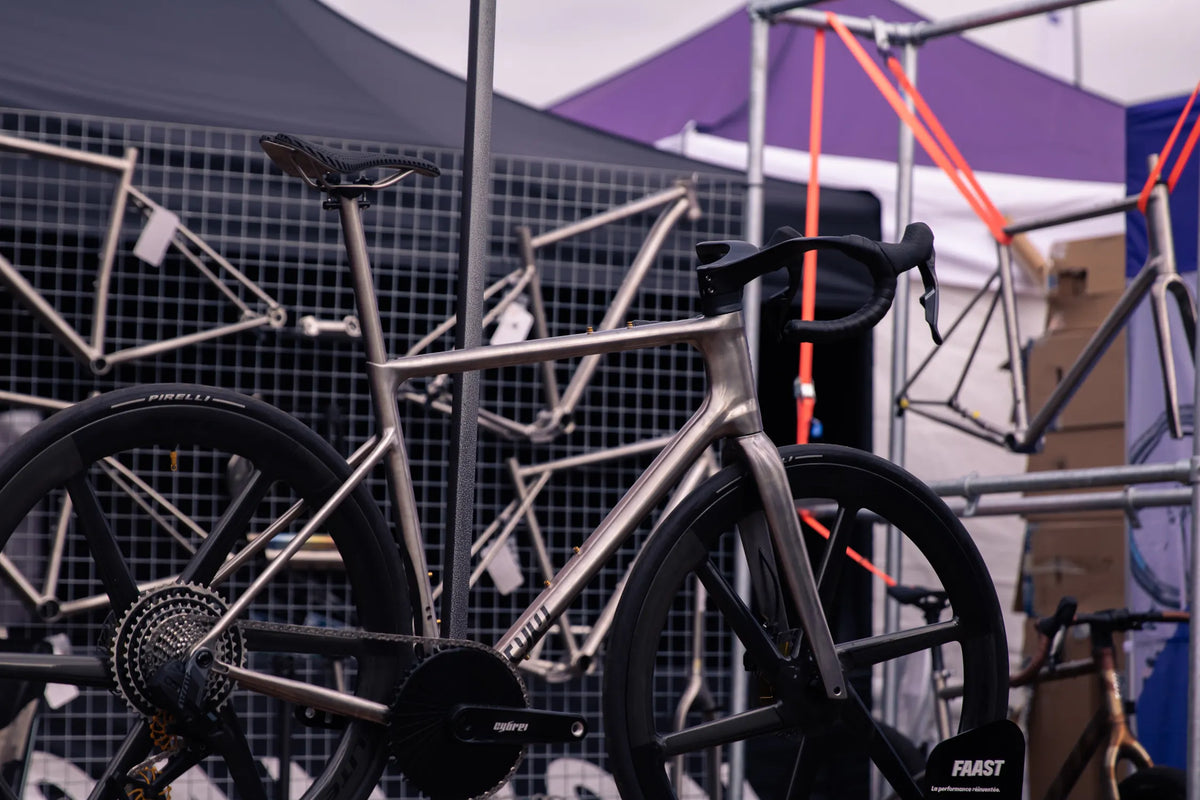
The FAAST is a titanium road bike designed entirely around aerodynamics, for cyclists who ride fast: fast group rides, segments, sportives, racing. It is the brand's new top of the range, and Girona is where it was shown for the first time.

Six parts are 3D printed: the head tube, the junction between the top tube and the seat tube, the bottom bracket shell, the chainstays, the derailleur hangers and the titanium fork. The top tube and down tube, for their part, are hydroformed: a titanium tube shaped under hydraulic pressure takes on profiled sections where a round tube imposes its own shape. The head tube is pinched at the front and deep, which gives the bike two faces depending on the angle you see it from: slim from the front, massive in profile. The seatpost is not held by a clamp, but by a titanium wedge integrated into the printed junction.
The frame takes tires up to 700x35C. Each FAAST is built to order in the Montpellier workshop and delivered in five to eight weeks, with custom anodising and a lifetime warranty on the titanium components.

The frameset with 3D-printed titanium fork is expected to be priced at €4,990. If that price is confirmed, it would be the least expensive 3D-printed titanium from any brand on the market: equivalent framesets start above €8,000.
The 14-speed GRAAVE#
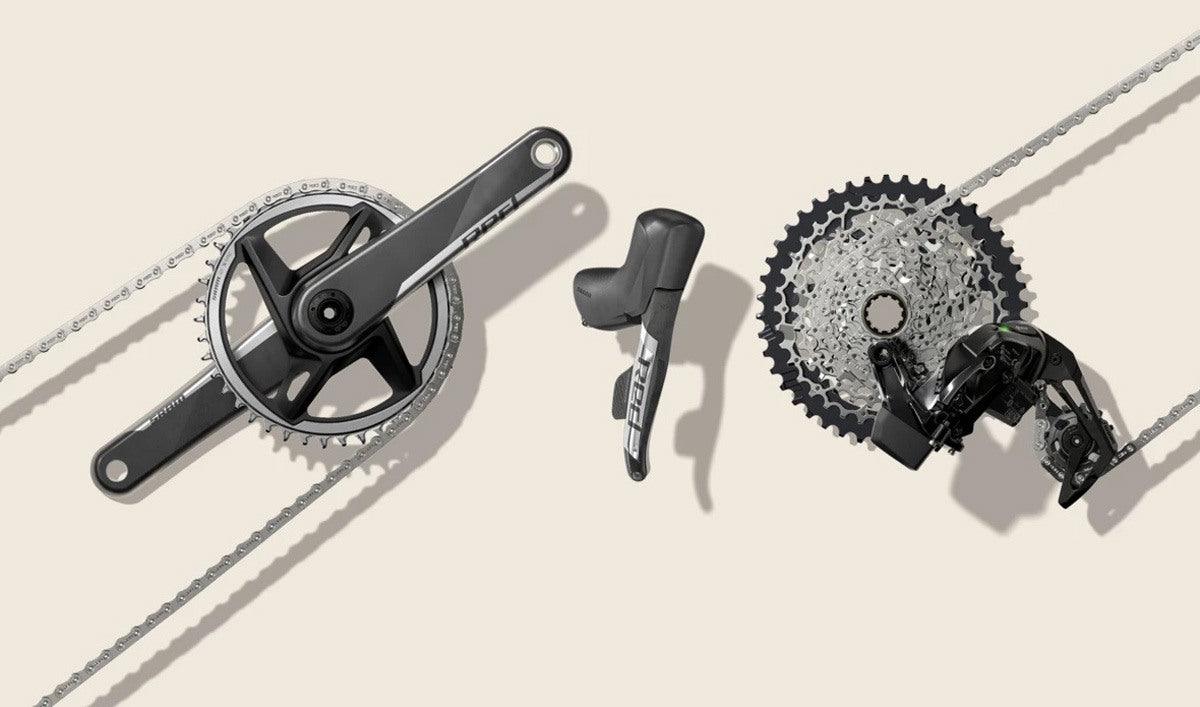
Alongside the FAAST, CYKL showed a one-off GRAAVE build: a 14-speed Whaleroad R7 electronic drivetrain with a single chainring. Fourteen gears without a front derailleur is the widest configuration that can be fitted to a gravel bike today, and no other brand in this market offers it yet.

The build was aimed first at bikepacking and long-distance gravel, where every gear counts when the day gets longer and the terrain decides for you. Both bikes stayed on display and available to test for the three days of the festival.
Journalists, customers and peers#
The FAAST drew most of the attention. Many journalists came to see it up close, and both bikes drew a crowd over the three days: curious visitors, customers who came to see the brand again and industry professionals. That was the audience we had hoped for.
The show was also a chance to meet the other brands there, including Bastion. Bastion Cycles builds its frames around 3D-printed titanium lugs joined to filament-wound carbon tubes: another way of working the same metal, on the other side of the world. We talked at length with Ben Schultz, one of the brand's founders, and we got on very well. Bastion is another world: the very top end, with price levels that have nothing to do with ours. It is not our playground (for now?), but it is beautiful.

What we take away#
The verdict is clear: customers met on the stand, a brand discovered by people who did not know it, and very positive feedback on both bikes. For CYKL it was a success, and the three days confirmed one thing: titanium tells its story better when you can touch it.
The next edition already has its dates: 17 to 19 September 2027 in Girona. We will be there.
The bikes shown in Girona#
The FAAST and the GRAAVE are built to order in our Montpellier workshop, with the components you choose and the anodised finish you want. To put yours together, use the CYKL configurator. If you would rather talk first, you can reach us in Montpellier: the details are on the contact page.
The CYKL workshop
Journal articles are written in the workshop, in Montpellier, by the team that builds and sets up the bikes. What we sell, how we measure, where our products come from: we say so in every article.